Here's a fun fact to share with your kids: your tummy is home to trillions of tiny living things, so many that you could never count them all. Scientists call this community the microbiome. At our house, we just call them the "good gut bugs."
These bugs are too small to see, but they are hard at work. They help us digest food and make vitamins, and (this is the big one) they help keep us from getting sick. Think of them as a tiny friendly team living inside you, and your job is to feed them well so they can do their jobs.
How Your Gut Bugs Grow Up With You
Your gut bugs have been moving in since the day you were born. Over the first few years of life, the mix of bugs changes and grows more complex until it looks more like an adult's. Scientists have found that the foods we eat are one of the most powerful things that shape which bugs move in and thrive.
The great news for parents: childhood is a golden window. A child's gut bugs respond to food even more than a grown-up's do, so the meals you serve now really matter.
Why Good Gut Bugs Are Your Immune System's Coaches
Here is the part that amazes most parents. A huge portion of the body's immune system, its germ-fighting defense team, lives right next to the gut. The good gut bugs act like coaches that train the immune system to tell the difference between harmless things (like food and pollen) and real threats (like germs).
When the good bugs eat fiber, they make special healthy compounds called short-chain fatty acids. These act like messages that calm down unnecessary inflammation and teach the immune system to stay balanced. A well-trained immune system is linked to lower rates of allergies and asthma down the road.
Foods That Make Your Gut Bugs Happy and Strong
There are two superstar food groups for a healthy belly zoo:
1. "Bug food" (prebiotics and fiber)
These are fibers in plants that your body can't digest, but your good bugs LOVE to eat them. Eating a rainbow of these feeds the good bugs so they grow and multiply (Shurney & Pauly, American Journal of Health Promotion, 2019; Lalli et al., American Journal of Clinical Nutrition, 2025).
Great choices:
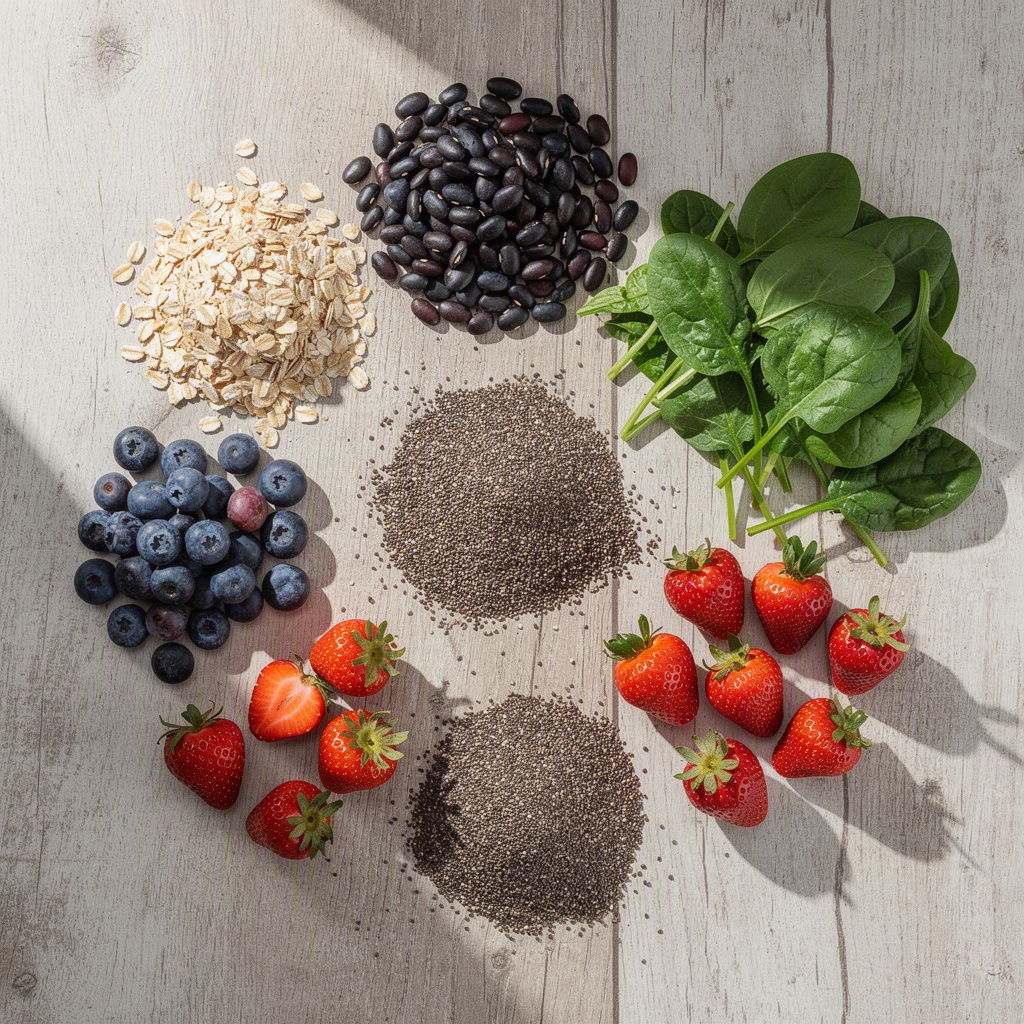
- Fruits like bananas, apples, and berries
- Vegetables like onions, garlic, asparagus, and broccoli
- Whole grains like oats and whole-grain bread
- Beans, lentils, nuts, and seeds
- Potatoes (especially cooled, like in a potato salad)
2. "Bug reinforcements" (probiotics and fermented foods)
These foods contain live friendly bugs that join the team (Fahim et al., Cochrane Database of Systematic Reviews, 2025).
Kid-friendly options:
- Yogurt with live/active cultures
- Kefir (a drinkable yogurt, great in smoothies)
- Mild cheeses
- For adventurous eaters: sauerkraut, pickles, or miso soup
The simplest rule of all: the more colorful, whole-plant foods on the plate, the happier and more diverse the gut bugs, and a diverse bug team is a healthy bug team.
Foods That Make Your Gut Bugs Grumpy
Some foods do the opposite. They feed the "troublemaker" bugs and crowd out the good ones. Studies in kids show that diets heavy in these are linked to fewer good bugs and less variety in the belly zoo:
- Sugary drinks and lots of sweets. Even in babies, added sugar lowered the helpful bug numbers in one study.
- Refined/white grains (white bread, many packaged snacks) that have had the fiber stripped out.
- Fried foods and fast food. A "Western-style" diet high in these is tied to lower good-bug variety.
- Ultra-processed snack foods that are low in fiber.
These foods aren't "forbidden." The goal is balance. Think of them as "sometimes foods," not everyday foods, so the good bugs always have the upper hand.
One Important Note for Parents
Your child's doctor can help if there are ongoing tummy troubles. Also, antibiotics, while sometimes necessary and important, can knock down good bugs too. This means after a course of antibiotics, loading up on fiber and yogurt-type foods can help the good team bounce back. Talk to your pediatrician before starting any probiotic supplement, since not all products are proven to help.
The "Happy Belly Plate" Meal-Planning Formula
Build each meal around this simple formula:
- A plant with fiber (a fruit or veggie; bonus points for a second color)
- A whole grain or bean (oatmeal, whole-grain toast, brown rice, lentils)
- A protein (eggs, fish, chicken, beans, nuts)
- A "reinforcement" a few times a day (yogurt, kefir, or cheese)
Aim to "eat the rainbow" across the week. The more different colors, the more different good bugs you grow.
A Week of Happy-Belly Ideas
Breakfasts
- Oatmeal topped with banana and berries
- Yogurt parfait with granola and fruit
- Whole-grain toast with nut butter + a kefir smoothie
Lunches
- Bean and cheese whole-grain wrap with apple slices
- Hummus (chickpeas = bug food!) with whole-grain pita and veggie sticks
- Brown rice bowl with chicken and broccoli
Dinners
- Lentil or veggie-loaded pasta with whole-grain noodles
- Baked fish with roasted potatoes and asparagus
- Homemade tacos with beans, veggies, and cheese
Snacks
- Yogurt with berries
- Apple or banana with nut butter
- Veggie sticks and hummus
- A small handful of nuts or seeds
Make It a Family Game
- "Feed the bugs" challenge: count how many different-colored plants everyone eats in a day.
- Name the bug team: let kids give their gut bugs funny names so caring for them feels personal.
- Grow one food: a pot of herbs or a few veggies can get kids excited to eat what feeds their bugs.
Small, consistent choices add up. Every colorful, fiber-rich meal is a little gift to the invisible helper team working hard to keep your child healthy. For more ideas, see Fiber: Your Secret Weapon for Steady Blood Sugar and 7 Gentle Tricks to Get Kids Loving Fruits and Veggies.
This blog is for general education and is not a substitute for advice from your child's pediatrician. Talk to your doctor about your child's specific nutrition needs, any digestive symptoms, or before starting supplements.
References
- Laursen MF. Gut microbiota development: influence of diet from infancy to toddlerhood. Ann Nutr Metab. 2021.
- Fontaine F, Turjeman S, Callens K, Koren O. The intersection of undernutrition, microbiome, and child development in the first years of life. Nat Commun. 2023.
- Schoultz I, Claesson MJ, Dominguez-Bello MG, et al. Gut microbiota development across the lifespan: disease links and health-promoting interventions. J Intern Med. 2025.
- Davis EC, Dinsmoor AM, Wang M, Donovan SM. Microbiome composition in pediatric populations from birth to adolescence: impact of diet and prebiotic and probiotic interventions. Dig Dis Sci. 2020.
- Palma P, Farber DL, Konnikova L, Levy O. Immune development in early life. Nat Immunol. 2026.
- Donald K, Finlay BB. Early-life interactions between the microbiota and immune system: impact on immune system development and atopic disease. Nat Rev Immunol. 2023.
- Shurney D, Pauly K. The gut microbiome and food as medicine: healthy microbiomes = healthy humans. Am J Health Promot. 2019.
- Lalli MK, Salo TE, Hakola L, et al. Associations between dietary fibers and gut microbiome composition in the EDIA longitudinal infant cohort. Am J Clin Nutr. 2025.
- Fahim SM, Huey SL, Palma Molina XE, et al. Gut microbiome-based interventions for the management of obesity in children and adolescents aged up to 19 years. Cochrane Database Syst Rev. 2025.
- Berding K, Holscher HD, Arthur AE, Donovan SM. Fecal microbiome composition and stability in 4- to 8-year old children is associated with dietary patterns and nutrient intake. J Nutr Biochem. 2018.
- Kaplan GG, Ng SC. Understanding and preventing the global increase of inflammatory bowel disease. Gastroenterology. 2017.
- Szajewska H, Berni Canani R, Domellöf M, et al. Probiotics for the management of pediatric gastrointestinal disorders: position paper of the ESPGHAN Special Interest Group on Gut Microbiota and Modifications. J Pediatr Gastroenterol Nutr. 2023.
Plan a week of happy-belly meals
Use AIM to build fiber-rich, colorful family meals for the week, along with a ready-to-shop grocery list.
Build my meal plan